What Is Stormwater?
We’re not talking about what falls from the sky but the runoff which is generated when rain and/or snowmelt flows over land and surfaces such as concrete driveways, sidewalks, streets, parking lots and rooftops, and does not percolate into the ground.
Why Is Stormwater an Issue?
Stormwater runoff is one of the leading causes of water pollution in the United States. As it flows, stormwater runoff picks up dirt, trash, oil, grease, chemicals, and other pollutants. Stormwater runoff is not treated so those pollutants are carried to waterways, canals, parks, community lakes, retention basins, and drywells. Polluted stormwater runoff can have negative impacts to aquatic ecosystems, the environment and our drinking water sources.
What You Can Do
Storm drains are found in our streets, parking lots, Highways and more. You probably walk by a few of them each day, but just don’t think much about them. However, stormwater runoff is one of the leading causes of water pollution in the United States. Stormwater will pick up dirt, trash, oil, grease, chemicals, and other pollutants as it flows over parking lots, streets and other impervious surfaces. Find out how you can help us protect our water by using these simple pollution prevention tips and ideas.
Storm Sewer vs. Sanitary Sewer
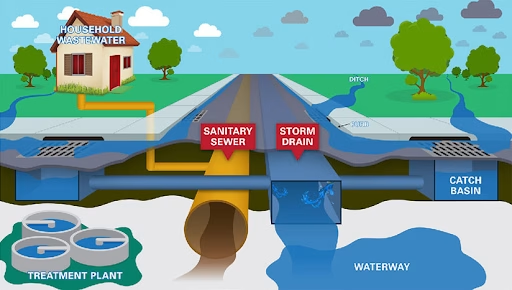
Storm sewers are designed to prevent flooding and transport rainwater that falls in communities via the storm drain system, called a Municipal Separate Storm Sewer System (or MS4 for short) which includes streets, curbing, gutters, catch basins, underground piping, channels, washes, etc.
Stormwater is redirected to canals, parks, community lakes, retention basins, and drywells without treatment. Sanitary sewers take wastewater (from household and commercial uses i.e. sinks, toilets, washers, etc.) and carry it through an underground separate sewer pipe to a wastewater treatment plant where pollutants are removed.
Identify and Report Illegal Dumping
Storm drains are only for rain water (aka stormwater runoff). Dumping trash, pollutants and debris in the catch basins is illegal. If you spot something other than stormwater in the street or catch basins you may report the problem by contacting us or visiting our Members & Sponsors page to select the appropriate municipal member link. Provide as much information as possible (address, business name, license number, date, time, etc.). The local municipality will reach out to address the issue.
It is illegal to knowingly dump or discharge pollutants into storm drain systems and local ordinances can impose significant penalties.
Stormwater Runoff Facts
Rainfall that does not soak into the ground due to impervious surfaces, like pavement and concrete, becomes runoff and flows overland into streets, curb and gutters into catch basins, storm pipes, retention basins, channels, and washes or rivers. Unlike sanitary sewer, which is water that flows down the bath, shower, sink, or laundry and drains to a wastewater treatment plant, runoff from rainfall and snowmelt generally flows unimpeded and untreated through the environment.
A natural environment, like a desert or mountain, can absorb (infiltrate) a lot of rainwater; and when the sponge (soil profile) is saturate the water begins to accumulate and flow as rivulets, streams, or rivers. Because this natural environment has minimal uses, like hiking or low-impact grazing, very few pollutants are expected in the runoff. In contrast, the built environment, like Maricopa County or greater Phoenix metro, has many uses and activities and, unsurprisingly, several potential pollutants. Example activities include transportation, residential and commercial development, and occasionally concentrated feeding operations.
Pollutants must be managed at the source to ensure the environment downstream (and there is always someone or something downstream) is protected for others to use, either for recreation (fishing or swimming) or source water (to drink from and bathe in). Below are lists of pollutants and sources, and potential actions you can take to make a difference in protecting our runoff.
Common pollutants in the built environment:
- Nutrients (ammonia, phosphorus), chemicals (pesticides)
- Bacteria (fecal coliform, escherichia coli)
- Metals (lead, copper, zinc)
- Hydrocarbons (oils and greases)
- Soils, yes, dirt is a pollutant in many senses
- Garbage (Styrofoam cups, cigarette butts, clothing, cushions, leaf litter)
Sources of pollutants:
- Lawn fertilizers and mulch, and bug spray or weed killer
- Pet and wildlife excrement, concentrated feeding operations, and sanitary sewer overflows
- Vehicle and equipment wear (brake pads, leaky hoses)
- Gas-powered cars and trucks (combustion, leaky parts)
- Construction, wind storms (loose earth)
- Litterbugs and upended or full trash bins
Actions to minimize pollutant deposition to runoff’s path:
- Use fertilizers in accordance with the manufacturer's label
- Minimize use of organic compost – use just enough
- Pick up after pets
- Resist the urge to feed ducks and geese at ponds
- Maintain vehicles in good repair, fix leaks and clean up spills
- Stabilize driveways and parking areas; park only on improved surfaces
- Bag and tie trash; avoid placing trash outside of the garbage bin – take it with you if you must