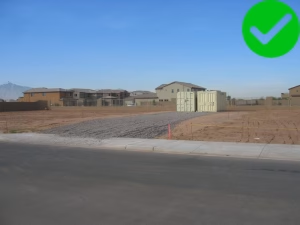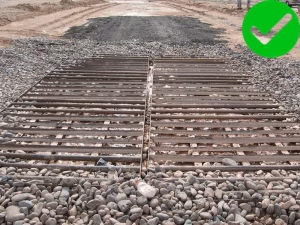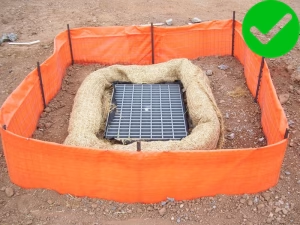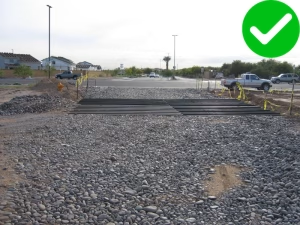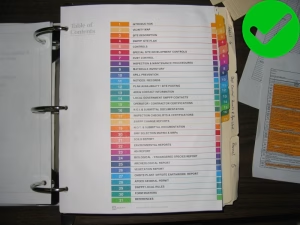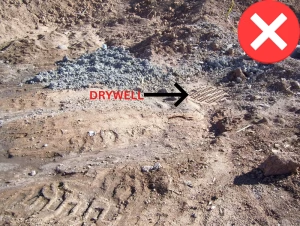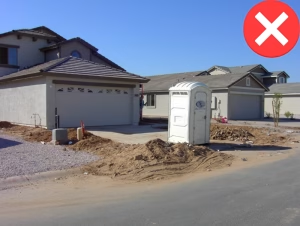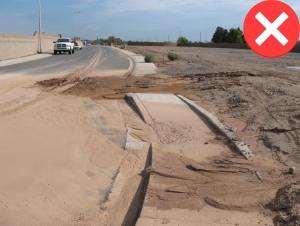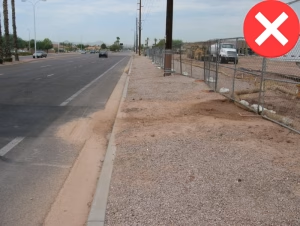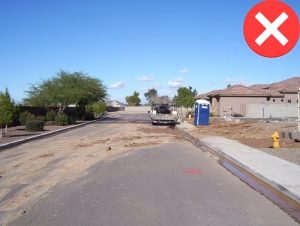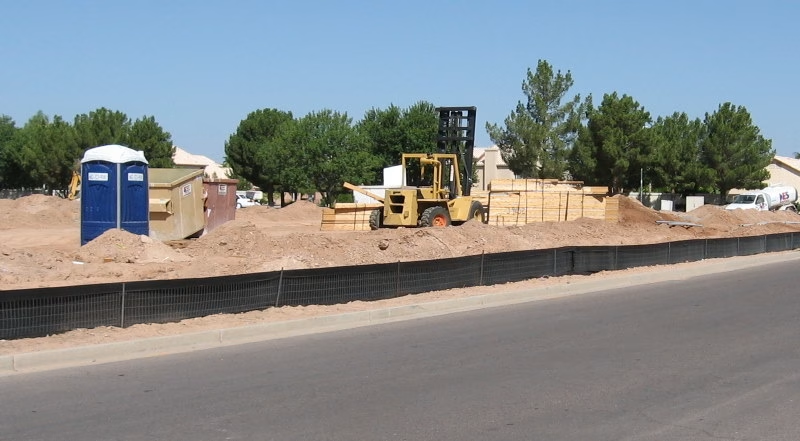

Stormwater runoff associated with construction activities can be a major contributor of pollutants to the city storm drain system. Pollutants like dirt, fuels, oils, trash, concrete, washout, lime, joint compound, paint, etc. could end up in retention basins, parks, and community lakes.
A Construction General Permit (CGP) must be obtained under the Arizona Pollutant Discharge Elimination System (AZPDES) for any sites that will disturb one or more acres, or less than an acre but are part of a larger common plan of development. If your project fall under those conditions, be sure to implement the following steps:
- Prepare a Stormwater Pollution Prevention Plan (SWPPP) prior to construction activities. A SWPPP is a site-specific plan that describes how to manage stormwater and how to reduce or eliminate the discharge of pollutants. Click HERE for more information on SWPPPs, including a checklist and template.
- Submit a completed Notice of Intent (NOI) to the Arizona Department of Environmental Quality (ADEQ) for permit coverage. For details on how to submit a NOI, click on THIS LINK and scroll down for instructions on how to do so.
- Once your application is approved by ADEQ, you will recieve and authorization number (or AZCON number) – Post the AZCON# or a copy of the approved authorization form near the site’s main entrance.
- Implement and maintain a combination of Best Management Practices (BMPs), or control measures at your site, including erosion and sediment controls, perimeter controls, track-out control devices, storm drain and drywell protection, stabilization of disturbed areas, spill prevention and containment, concrete washout containment, and chemical storage
- Conduct routine site inspections per the frequency detailed in the CGP. Complete written inspection reports and maintain them in the SWPPP.
- Promptly maintain or replace any damage or ineffective BMPs observed during site inspection.
- Update the SWPPP and site map to show changes or modification to any BMPs. The site map should reflect current site conditions.
- Complete stabilization of all disturbed areas.
- Clean all stormwater infrastructure upon completion of construction activities
- Submit a completed Notice of Termination (NOT) to ADEQ once final stabilization has been achieved.
- Retain all pertinent documents (SWPPP, Inspection Reports, Revised Site Map, etc.) associated with the site for at least three years from the date the NOT was submitted to ADEQ.
Looking to download a PDF of these steps to have digitally or print? Click HERE for a construction BMP brochure that includes these details as well as examples of good and bad practices.
You can also click HERE for a printable poster of Best Management Practices.